


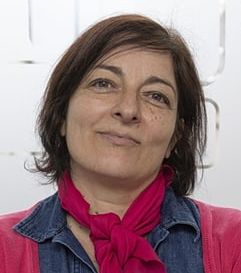
 Teresa Pellegrino, Ph.D.
Professor, Senior Researcher Principal Investigator, Tenured Team Leader of the group ‘Nanomaterials for Biomedical Applications’ at Istituto Italiano di Tecnologia (IIT), Genoa, Italy
Magnetic Nanoparticles: From Their Synthesis to Magnetic Hyperthermia, Cancer Immune Therapy and Cell Tracking Applications
Dr. Pellegrino's group focuses on the preparation and characterization of organic-inorganic nanostructured materials in which different properties (i.e. chemical, and magnetic, stimuli responsive) are properly tailored and merged into single nano-objects for different medical applications. Her current research interests focus on the development of inorganic nanostructures for drug delivery, magnetic hyperthermia, photo-thermal treatment and radiotherapy exploiting cation exchange radio-protocols.
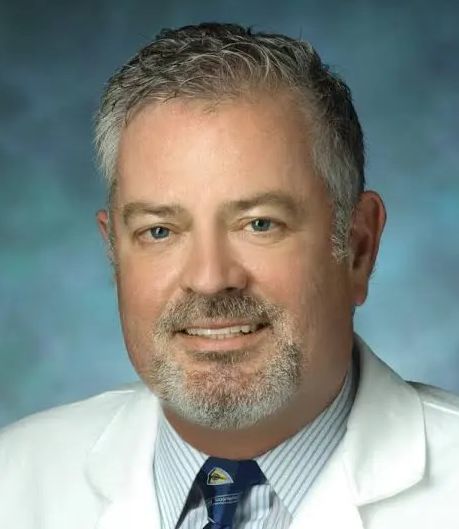 Jeff Bulte, Ph.D.
Professor of Radiology and Radiological Science, Johns Hopkins School of Medicine, Baltimore, MD, U.S.A.
Engineering Magnetotheranostics for Magnetic Particle Imaging
Dr. Bulte is is a professor of radiology, oncology, biomedical engineering, and chemical and biomolecular engineering who specializes in molecular and cellular imaging. After postdoctoral and staff scientist positions at the National Institutes of Health (NIH), where he spent a decade as a trailblazer in stem cell imaging, he joined Johns Hopkins University in 2001. Specifically, he is developing new contrast agents and theranostics with particular emphasis on in vivo cell tracking and regenerative medicine. Bulte has pioneered methods to label cells magnetically, making them visible by magnetic resonance imaging (MRI) and magnetic particle imaging (MPI).
 Sylvie Begin-Colin, Ph.D.
Professor, Material Sciences and Chemistry of Inorganic Materials, Strasbourg University, France
Engineering of Magnetic-Based Nanoplatforms for Theranostic with a Focus on Targeting Strategies
Dr. Begin's research focuses on the engineering of hybrid nanomaterials for health, energy, and environmental applications. Her projects involve developing advanced iron oxide nanoparticles that serve as multifunctional theranostic platforms, combining targeted tumor diagnosis - often via MRI - with hyperthermia-based treatment for cancer. She aims to improve nanoparticle stability, selectivity, and biocompatibility for applications in early cancer detection and therapy, as well as environmental remediation such as water purification and pollutant adsorption. Collaborations include commercializing dendronized nanomaterials for medical use and exploring environmental nanodevices to capture contaminants like phosphate. Her broader goal is to translate fundamental nanoscience discoveries into innovative solutions that directly address challenges in public health and ecological sustainability.
.jpg) Jeffrey N. Anker, Ph.D.
Jeffrey N. Anker, Ph.D.
Professor of Chemistry and Bioengineering, Clemson University, Clemson, SC, U.S.A.
Catching and Counting Molecules with Buoyant Microbubbles and Magnetic Microspheres for Rapid yet Ultrasensitive Point-of-Care Diagnostics
Dr. Anker's research spans the development of optical and magnetic nanosensors, advanced imaging techniques, and smart medical implants, with a focus on noninvasive diagnostics and real-time molecular sensing. After completing his BS at Yale and PhD at the University of Michigan, Dr. Anker conducted postdoctoral work at Northwestern University before joining Clemson in 2008. He is a senior member of the National Academy of Inventors, cofounder of Aravis BioTech LLC, and advisor to Akadeum Life Sciences, with expertise in nanomaterials, point-of-care diagnostics, and biomedical device innovation.
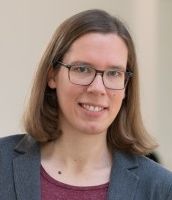 Anna C. Bakenecker, Ph.D.
Professor of Biomedical Engineering at the Technical University Darmstadt, Germany
Magnetic Particle Imaging and Functional Hydrogels for Micro- and Nanorobotics
Dr. Bakenecker develops micro- and nanorobots with various microfabrication techniques and synthesis methods. Together with medical doctors, she then investigates their use for medical applications. One of her specialties is the use of magnetic particle imaging to observe the robots fate and efficacy. Dr Bakenecker studied physics at the Universities of Münster and Heidelberg and completed her doctorate at the University of Lübeck. After a postdoc at the renowned Institute for Bioengineering of Catalonia in Barcelona, she spent some time as a group leader at the Fraunhofer Institute for Individualised and Cell-based Medical Engineering in Lübeck.
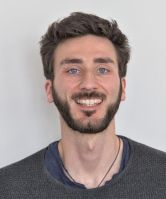 Leon Kaub, Ph.D.
Postdoctoral Researcher, Physics of Cells and Cancer, Institut Pierre-Gilles de Gennes (IPGG), Institut Curie, Paris, France
Imaging Magnetic Stray Fields from Magnetite Nanoparticles in Human Brain Tissue with Nitrogen-Vacancy Centers
Dr. Kaub studies naturally occurring magnetic nanoparticles across a wide range of organisms, from humans to microscopic magnetotactic bacteria and magnetic protists. During his PhD, he investigated magnetite nanoparticles in human brain tissue, using SQUID sensors for bulk samples and nitrogen-vacancy center magnetometry to directly image the stray fields produced by individual particles in the tissue. He studied physics and geophysics at the University of Munich and completed his doctorate through a joint project between geophysics and neuroanatomy. He is currently a postdoctoral researcher at the Institut Curie in Paris, focusing on the fate of magnetic nanoparticles in human cells, with particular interest in how human stem cells biosynthesize superparamagnetic iron oxide nanoparticles.
.jpg) Quentin Pankhurst, Ph.D.
Quentin Pankhurst, Ph.D.
Professor of Physics, Department of Medical Physics & Biomedical Engineering, and Director of Healthcare Biomagnetics Laboratory at University College London, U.K.
Translational R&D - the Endomagnetics Story
Many of you not only know Dr. Pankhurst as an excellent physicist in the field of magnetism, but also as an ideas generator who is deeply interested in translating our magnetic particle research into the field of Healthcare Biomagnetics, which is based on the unique magnetic sensing, heating, and actuation properties of biocompatible magnetic nanoparticles. In 2008, Dr. Pankhurst became the Director of the Davy-Faraday Research Laboratory at the Royal Institution. This was followed in 2011 by him setting up the UCL Institute of Biomedical Engineering, a cross-faculty institute that brings together 250 PIs and their teams – more than a thousand researchers in total – in common programmes based on translational research and experimental medicine. Even before and during these appointments, he was very active in founding and co-founding several companies. At our meeting, he will speak to us about his most successful one - Endomagnetics Limited. This will be an interactive session with the involvement of graduate students interested in entrepreneurship.
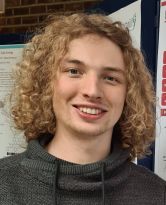 Tutorial About the Chemistry, Synthesis and Derivatization of Magnetic Particles
Levy Van Leuven, Ph.D. Student / Teaching Assistant
General, Organic and Biomedical Chemistry Unit, University of Mons, Belgium
Levy Van Leuven is currently completing his Ph.D. in Prof. Sophie Laurent’s laboratory at the University of Mons (under the supervision of Prof. Sophie Laurent and Dr. Dimitri Stanicki). His research focuses on the synthesis of superparamagnetic iron oxide nanoparticles by thermal decomposition in continuous-flow chemistry. His work is structured into three main areas: the investigation of the influence of different stabilizers added during synthesis on the physicochemical properties of nanoparticles, the post-synthesis functionalization of particles using flow photochemistry techniques and the automation of the entire process of synthesis, purification, and stabilization of nanoparticles.
Levy Van Leuven will deliver three tutorials covering the chemistry, synthesis, and derivatization of magnetic nanoparticles. Come and learn about all the important chemical issues involved in magnetic nanoparticles. Levy will present them every morning of our meeting.
There will be a handout for these 3 tutorial sessions.
And the high-resolution version of these excellent slides is available here.
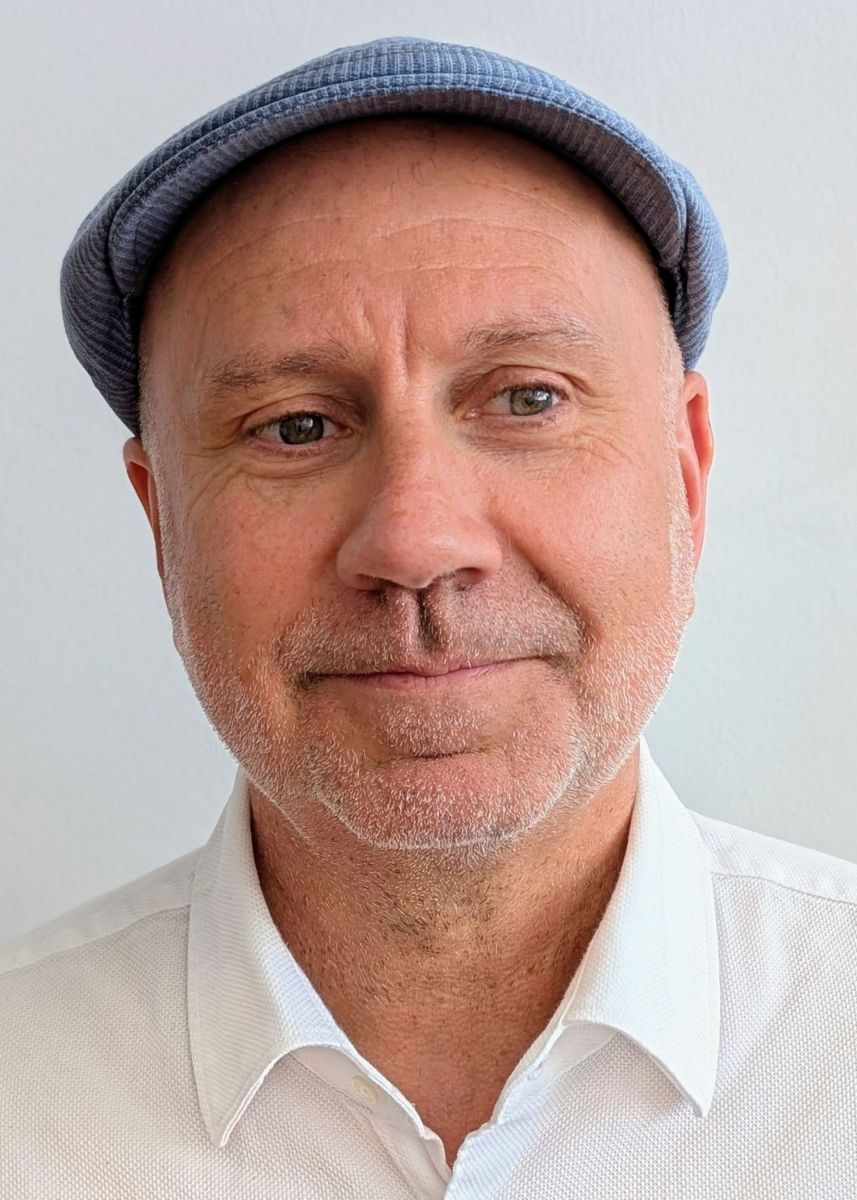 Introductory Short Tutorial: The Magnetic Nanoparticle Iceberg
Xavier Batlle, Ph.D.
Professor of Condensed Matter Physics, Department of Condensed Matter Physics, University of Barcelona (UB), Spain
Dr. Batlle’s work has aimed at the interplay among finite-size, surface, interface, interaction and proximity effects, and at the intimate correlation of the nanostructure (physical, chemical and magnetic) to the magnetic, electronic and electron transport properties of nanomaterials, including nanoparticles and nanostructures, thin films and heterostructures, and ordered arrays of nanoelements. He is Fellow of the American Physical Society (2012), Silver Insignia of the UB (2024) and Salvador Velayos Award in Magnetism (2024). Dr. Batlle is the co-leader and co-founder of the Group of Magnetic Nanomaterials (since 1993). He is a visiting researcher at the Lawrence Berkeley Nat Lab (CA, USA), U.C. San Diego (CA, USA), CNRS and Institute Laue Langevin (Grenoble, France).
Dr. Batlle will get us up to speed on the magnetic properties of magnetic nanoparticles in the first session of the conference. Don't miss it!
There will be a handout for this introductory tutorial.
And the high-resolution version of these excellent slides is available here.