

Carbon Secrets of Ancient Oceans Unveiled
October 15, 2025 (ETH Zurich, September 26, 2025) For the first time, researchers at ETH Zurich, led by Prof. Jordon Hemingway, have shown that ancient oceans held 90 to 99 percent less dissolved organic carbon than today, challenging old views on Earth's history. This discovery, made by analyzing tiny egg-shaped iron oxide stones, suggests early seas were much less carbon-rich, forcing scientists to rethink theories on ice ages and the emergence of complex life. The team's innovative use of iron oxide grains for direct carbon measurement offers a new lens on Earth's past, promising to reshape our understanding of its geological and biological evolution. This method not only questions established beliefs about the development of complex life and ice ages but also opens new paths for exploring Earth's early environmental conditions.
For the original article, see here.
New Graduate Student and Postdoc Positions
September 23, 2025 nexMPI is an open European network (COST Action) that brings together expertise from industry, academia, medicine, biology, and regulatory affairs. Their mission is to expand access to MPI technology, foster cross-sector collaboration, and establish Europe as a global leader in MPI research and innovation. As this is a new program, there are quite a few new positions available, and many of them have to do with magnetic nanoparticles and related nanomedicine research. Check out their website, their program (e.g., regular talks about MPI) and their job announcements:
https://nexmpi.eu/open-positions/
Thematic Submissions Requested for Nanoscale Journal
August 13, 2025The journal Nanoscale is promoting a themed collection of articles related to Magnetic Nanoparticles: From Massart Method to a Cascade of Innovations and is pleased to announce an extension to the deadline to allow authors more time to finalise their submissions. If you work in the area and are interested in submitting, please send your work to Nanoscale before the new deadline of 16th January 2026.
.jpg)
In tribute to René Massart, this collection will cover various aspects of magnetic nanoparticles, including their synthesis, characterization, functionalization and application. This themed collection is being guest edited and rigorously assessed by Ali Abou-Hassan (Sorbonne University, France), Professors Nguyen T. K. Thanh (University College London, United Kingdom), Teresa Pellegrino (Italian Institute of Technology, Italy), Anna Cristina S. Samia (Case Western Reserve University, United States), Olivier Sandre (University of Bordeaux, France) and Lise-Marie Lacroix (Toulouse University, France).
For more details about your submissions to Nanoscale and Nanoscale Advances please consult this link here.
Other Thematic Submissions Requested About Applications of Magnetic Particles
August 10, 2025Collection of Paper Submissions: Applications of magnetic particles in biomedical imaging, diagnostics and therapies
In recent years, great strides have been made in the fabrication of inorganic nanoparticles of desired size, shape and crystal structure. This synthetic control enables researchers to precisely manipulate the physical and chemical properties of nanomaterials, opening up new technological opportunities. As a result, inorganic nanoparticles are now being extensively explored for applications including precision imaging, diagnostics and biomedical therapies. Magnetic nanoparticles have unique practical opportunities in this regard. They can be manipulated by external fields to move, and to generate heat as well as being used as tracer materials for imaging and sensing.
Submit papers here: https://www.nature.com/collections/dhahfijacf
Deadline for submission: December 31, 2025
This special collection is edited by Anna Bakenecker, Inge Herrmann & Jing Zhong.
Report from the European School on Magnetism (ESM) 2025
August 03, 2025 The European School on Magnetism (ESM) 2025 took place from 30 June to 11 July 2025 in Liege, Belgium. The focus was on "Topology for Low-Energy Spintronics". As in previous years, the school's mission was to train and connect around 100 young scientists and engineers in magnetism, primarily PhD students and early-career researchers.
Drawing on experience with hybrid formats, ESM 2025 combined shorter lectures with extended tutorials and practical sessions, allowing participants to personalize their learning experience. This new approach was very well received, with participants highlighting the value of hands-on sessions and increased interaction with lecturers.
Social aspects also made a strong contribution to the success of ESM 2025:
-
The ice-breaking evening and room-sharing arrangements facilitated networking and integration among participants.
-
The Discord platform was praised for its ease of use and efficiency in coordinating social and academic activities.
Visit the EMA website for more information and recordings of ESM 2025 lectures. Slides from all previous schools (recordings since 2020) are available in ESM repository.
The next ESM 2026 will be held in Uppsala, Sweden. ESM 2026 will be chaired locally by Prof. Biplab Sanyal and Dr. Heike Herper.
Magnetic Particles Can Fight Stubborn Biofilms
July 30, 2025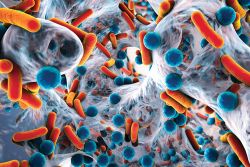 When bacteria infect our bodies, they sometimes form sticky mats of sugars and proteins called biofilms to protect themselves. This viscous layer makes it difficult for antibiotics and immune cells to reach the invading microbes, rendering usual therapies less effective. Researchers, led by Li Zhang at the Chinese University of Hong Kong and Ben Wang at Shenzhen University, demonstrated that magnet-driven, light-activated microrobots can cut through this goo and fight biofilms in the sinuses of animals (Sci. Robot. 2025, DOI: 10.1126/scirobotics.adt0720).
Other scientists have previously proposed using microrobots, which are smaller than 1 mm, to target and disrupt biofilm formations, either mechanically or by delivering chemicals that kill bacteria. But biofilms in the sinuses present a unique challenge for microrobots because our natural immune response to a sinus infection produces a viscous pus that’s hard to get through.
The researchers got around this sinus buildup problem by designing their bots to stir up the goo. External magnets placed near the sinuses guide the robots to align into chains and form spinning swarms that create a mechanical force to break up both thick sinus fluids and biofilms.
The microrobots themselves have a magnetic core and a shell of copper-doped bismuth oxoiodide (BiOI), a light-sensitive material. When exposed to visible light delivered by an optical fiber guided magnetically into the sinuses, electrons in the BiOI jump to a higher energy level, leaving behind positively charged holes. In this electron-hole pair, the excited electrons can react with oxygen to form superoxide radicals, while the holes react with water to produce hydroxyl radicals—both species are toxic to bacteria.
When the BiOI absorbs light, it also heats up, which further breaks down mucus and biofilms.
In live rabbit sinuses, the robots cut through thick mucus and destroyed bacterial biofilms without damaging healthy tissue. In pig sinus tissue, which is more anatomically like human sinus tissue, the microrobots also destroyed biofilms, with only 3% of bacteria surviving the treatment.
New Nanomedicine: Microflowers Map Capillaries
July 02, 2025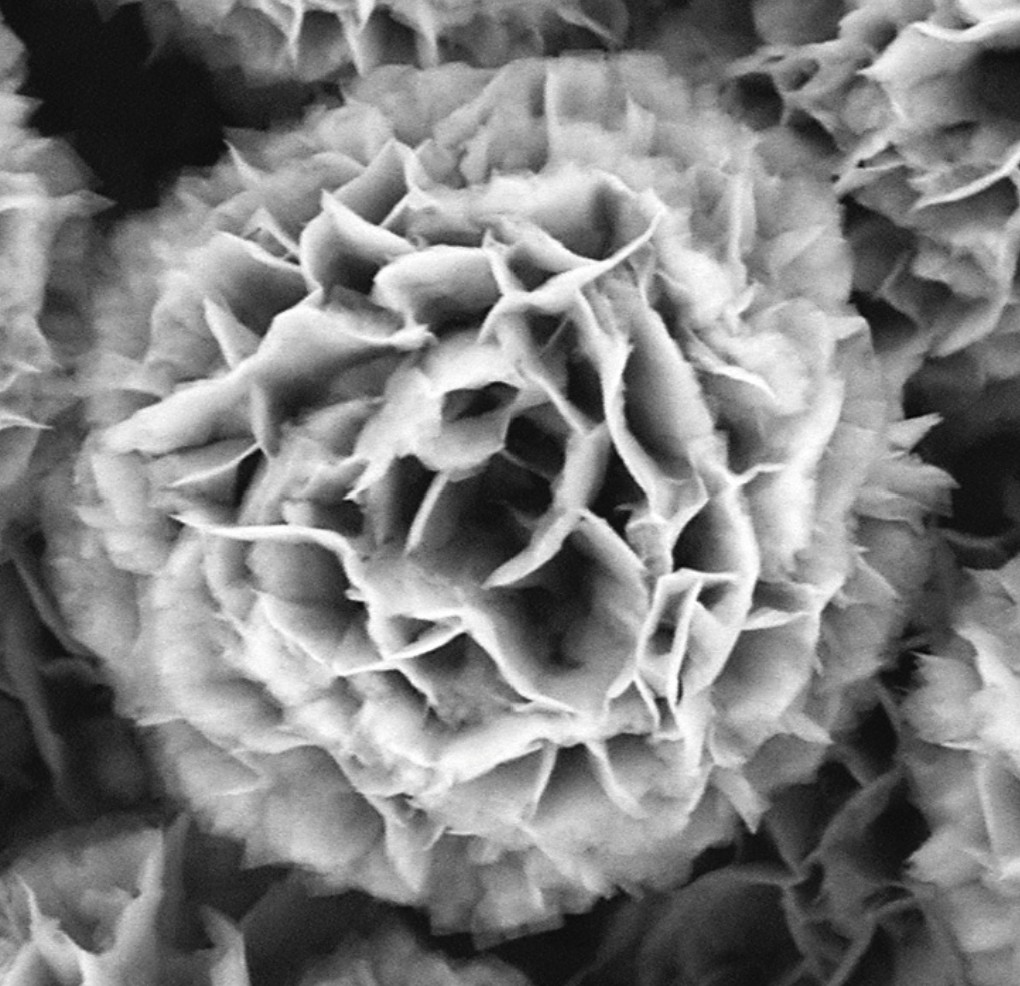 Tiny, flower-shaped devices made of copper phosphate were coated with iron nanoparticles and a fluorescent dye, then introduced into the fine vasculature of mice ears. This enabled a team from ETH Zurich to steer the microflowers using magnets and to track them with a combination of light and ultrasound. “It enables us to visualise small blood vessels in detail”, says Daniil Nozdriukhin, the lead author. In future, these flowers could also be used to deliver drugs precisely to their target.
Permanent Magnets Explained
June 10, 2025A recent Chemical and Engineering News "Periodic Graphics" explained permanent magnets. Just as a refresher, have a look at it here, where chemical educator and compound interest blogger Andy Brunning explores the materials science of permanent magnets: https://cen.acs.org/materials/Periodic-Graphics-Permanent-magnets-explained/103/web/2025/0
For more information, check out our Archives.
September 2017
Search this site with the power of