

The 15th Magnetic Carrier Meeting in Paris, France Was a Success
April 10, 2026.jpg)
The already 15th International Conference on the Scientific and Clinical Applications of Magnetic Carriers in Paris, France from May 26-29, 2026 at the Sorbonne University under the local guidance of Emilie Secret is over - and was once again a great success. Check out the abstract booklet and some other details on our website by clicking on the above picture or here.
Preparation of Highly Defined Cantilevers with Magnetic Tips
August 16, 2026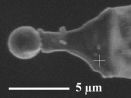 Peter Sun et al. at Cornell University devised a new focused-ion-beam-assisted method for preparing magnet tips for magnetic resonance force microscopy measurements. Their electrostatic transfer method enables a wide variety of tip shapes (nano-, micro-spheres, rods) and sizes, and also materials such as NdFeB and Nickel that were not previously possible with current fabrication methods. These magnetic cantilevers might be very useful in scanning probe methods. Check it out for more details at https://pmc.ncbi.nlm.nih.gov/articles/PMC13455554/.
World Molecular Imaging Society Looking for New President
August 12, 2026The World Molecular Imaging Society is looking for a new president. And this time, one of our own magnetic particle researchers is among the candidates:

So maybe you want to help Dr. Jeff Bulte get there? If you are a member of WMIS, then please don't miss your chance to vote!
Jeff has been to our first magnetic carrier meeting in 1996 and gave one of the invited talks at our last meeting in Paris 2026. In his research, he is developing new contrast agents and theranostics with particular emphasis on in vivo cell tracking and regenerative medicine. Jeff has pioneered methods to label cells magnetically, making them visible by magnetic resonance imaging (MRI) and magnetic particle imaging (MPI).
Radio-Frequency Toroid Susceptometry of Magnetic Nanoparticles
March 11, 2026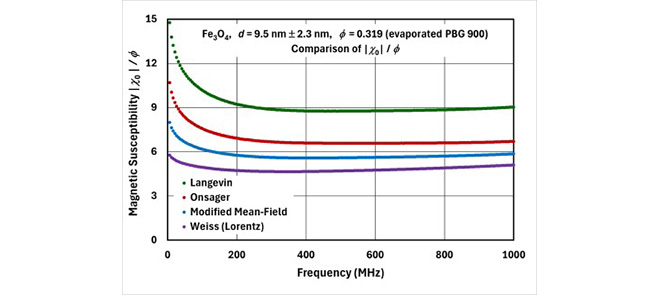 Ronald B. Goldfarb from the National Institute of Standards and Technology (NIST) in Boulder, CO, USA just published a new paper about the intrinsic magnetic susceptibility of noninteracting magnetic nanoparticles. He calculated it from the measured complex radio-frequency susceptibility of dipolar-coupled particles in colloidal suspension. The susceptibility, derived from the impedance of toroidal specimens in a shorted coaxial transmission line, requires no adjustment for demagnetizing factors. Three established models for interacting superparamagnetic particles — the Weiss molecular-field model, the Onsager model, and the modified mean-field model — are extended to magnetically viscous particles at frequencies above their Néel relaxation frequency. Magnetic figures of merit for nanoparticles are the real and imaginary parts of complex intrinsic susceptibility scaled by particle concentration. The work seeks to promote standard characterization methods for interlaboratory comparison of realistic distributions of magnetic nanoparticles at radio frequencies.
Check out this excellent work at https://ieeexplore.ieee.org/document/11363346.
Magnetic Microcatheter Delivers Therapies to The Tiniest Blood Vessels
December 16, 2025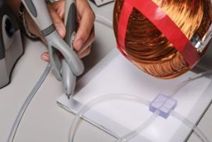 The MagFlow microcatheter, half the size of traditional microcatheters and powered by blood flow, is set to revolutionize therapy delivery to the smallest blood vessels, offering new treatment possibilities for complex cardiovascular and neurological conditions. Developed by the team at MicroBioRobotic Systems Laboratory (MICROBS), EPFL, and various hospitals, led by Associate Professor Mahmut Selman Sakar and Dr. Lucio Pancaldi, MagFlow's design minimizes vessel wall contact by harnessing the blood stream's kinetic energy. MagFlow operates with two bonded polymer sheets that inflate to deliver medical liquids, guided precisely by the OmniMag platform, which aligns a magnetic field according to a doctor's stylus movements. Tests have successfully used MagFlow to catheterize arteries in pigs' heads, necks, and spines for delivering contrast and embolizing agents.
For more information, check out https://news.epfl.ch/news/microcatheter-delivers-therapies-to-the-tiniest--2/ or the original article in Science Robotics here.
Microrobots Travel in the Blood Stream to Deliver Drugs
December 15, 2025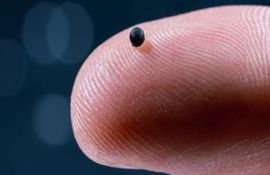 Every year, 12 million people worldwide suffer from strokes, often facing death or permanent disability due to inefficient drug delivery methods. Researchers from the Multi-Scale Robotics Lab, ETH Zurich, led by Dr. Fabian Landers, have created a microrobot that delivers drugs directly to specific body parts. This spherical capsule, with a soluble gel shell, uses iron oxide for magnetic guidance and tantalum for X-ray visibility. It dissolves to release drugs precisely where needed, promising to lower medication doses and reduce side effects like internal bleeding. The team guides this microrobot to the target area using magnets and an electromagnetic system. They load it with drugs that release when they heat the iron oxide with a high-frequency magnetic field, melting the gel shell. Injected via catheter into the bloodstream or cerebrospinal fluid, the microrobot employs a commercial guidewire and a flexible polymer gripper for precise placement. This innovation offers targeted treatment for thrombosis, infections, or tumors, potentially transforming therapy approaches and accelerating the move to human trials. ETH Zurich's method stands out for its combined magnetic and X-ray guidance, marking a leap forward in controlled drug delivery.
This study was published in Science: https://www.science.org/doi/10.1126/science.adx1708. To see how the microrobots work, check out this video on youtube: https://youtu.be/nnpZMW-f_ts?si=-6enRtcoxVo_PBeY
Also, the Website Magnetics / Business and Technology just described on August 4, 2026 the products of the company Magnebotix in more detail. Check it out, it is an interesting article.
New Iron Compound Doubles Absorption Efficiency
December 15, 2025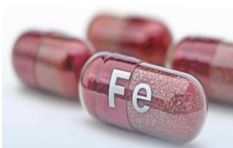 Iron deficiency, impacting 2 billion people worldwide, may see a revolutionary treatment thanks to ETH Zurich researchers. Prof. Raffaele Mezzenga and Prof. Michael Zimmermann have developed a dietary supplement that the body absorbs nearly twice as efficiently as standard iron supplements. In a clinical study with 52 anemic women in Thailand, the new compound showed nearly double the absorption efficiency of iron sulfate, the current standard. ETH Zurich's development offers a major step forward in nutritional science, introducing a tasteless, colorless solution that integrates seamlessly into daily diets, potentially cutting down the global prevalence of iron deficiency and anemia.
Check it out here: https://ethz.ch/en/news-and-events/eth-news/news/2025/11/new-treatment-for-combating-iron-deficiency-more-effectively.html
Altermagnets
November 15, 2025 If you are not only interested in magnetic particles, but also the newer developments in magnetism research and its underlaying physics, you might want to check out the website of the Spin Phenomena Interdisciplinary Center (SPICE) (http://www.spice.uni-mainz.de/).
Very recently, they hosted a conference about the “Theory of Unconventional Magnetism: exploring altermagnets and beyond”.All tutorials and talks from this exciting workshop are online.
SPICE’s website also gives upcoming workshops that you may want to attend and to propose your own workshop. As always, all the talks of the workshops and on-line seminars will be available at the SPICE YouTube channel.
For more information, check out our Archives.
September 2017
Search this site with the power of